
Guide
Which wine with which dish?
The short answer: look for a similar weight in the wine and the dish. The sauce often matters more than the meat or fish. Harmony, contrast, intensity and region offer four pointers, from aperitif to digestif.
These are starting points, not obligations. Your taste, the preparation and the bottle’s style matter too. Alcohol is optional throughout the meal: water, an infusion or an alcohol-free drink belongs at the table.
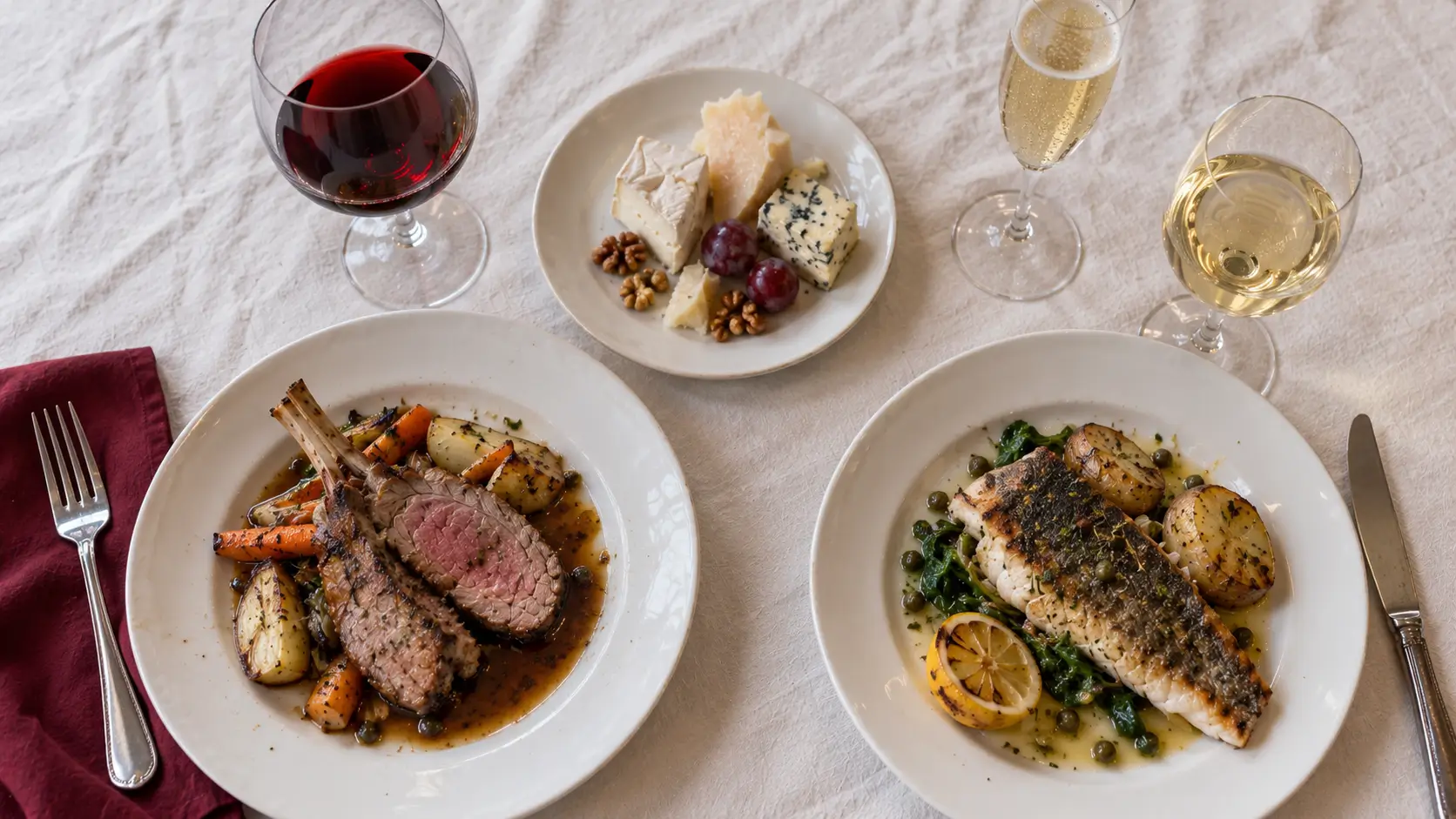
What is the golden rule of food and wine pairing?
A good pairing gives both the dish and the wine room to speak. A powerful red can overpower grilled sea bass. A light wine may disappear beside a wild boar stew.
- Harmony : Bring similar flavours together: veal blanquette and Meursault, mushrooms and a mature pinot noir.
- Contrast : Freshness balances richness: oysters and Chablis, Roquefort and Sauternes, bubbles and creamy food.
- Intensity : Light dish, light wine; powerful dish, fuller wine. Adapt this pointer to the preparation.
- Region : « What grows together goes together » offers a starting point: sauerkraut and riesling, cassoulet and Cahors, Comté and vin jaune.
The sauce can guide the pairing: fish in red wine sauce with a light red, chicken in cream with a white. Fat and salt can soften tannins; sugar and chilli can emphasise bitterness or alcoholic heat. Generally serve light before powerful and dry before sweet. White before red is not compulsory: follow the dishes.
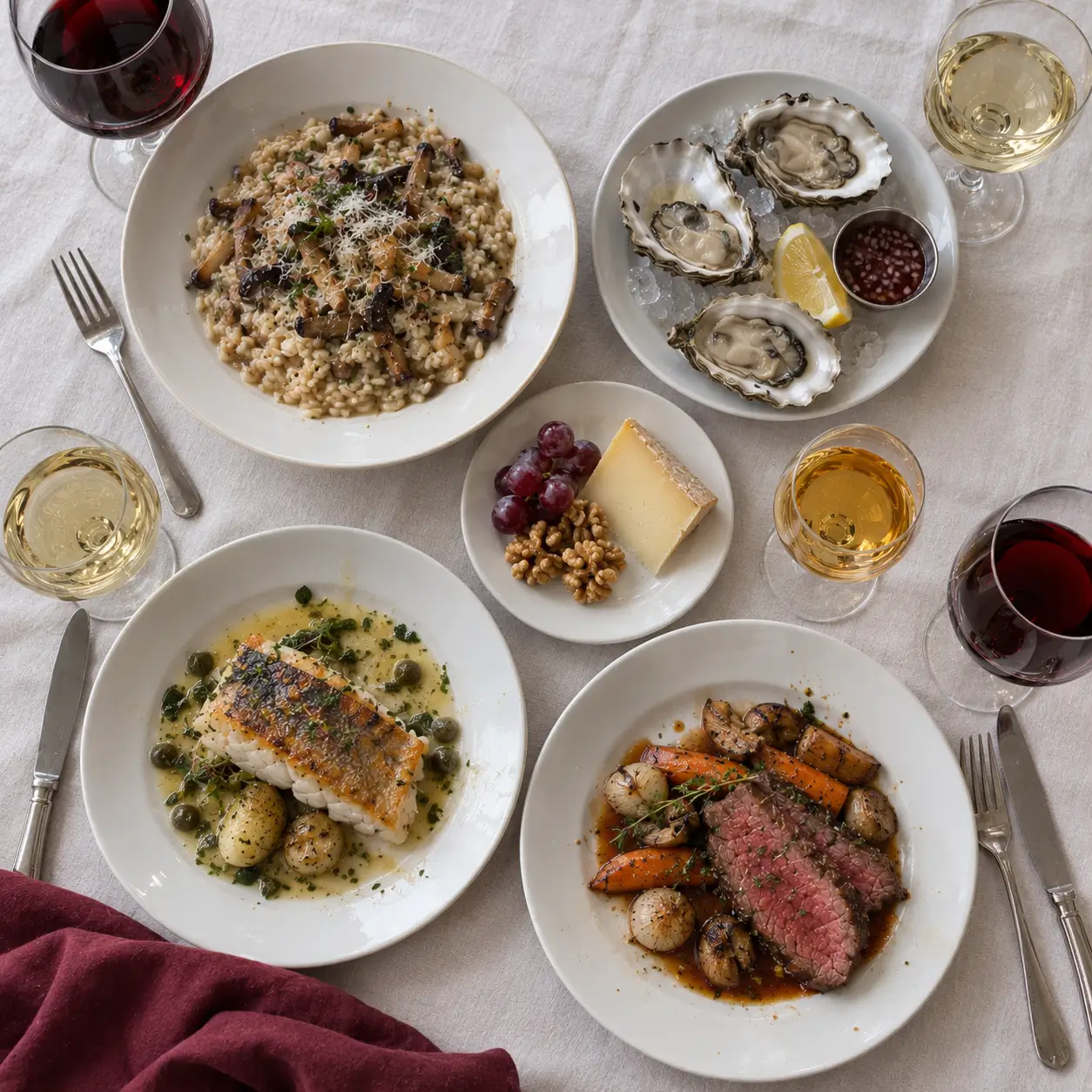
Which wine with which dish? A reference table
| Dish | Wines to consider | The guiding principle |
|---|---|---|
| Grilled or roasted red meat: rib of beef, leg of lamb | Structured reds: Médoc, Saint-Émilion, Cahors, Côte-Rôtie | Intensity; fat and salt can soften tannins |
| Red meat in sauce: bœuf bourguignon, daube | Burgundy, Côtes-du-Rhône, Bandol | Region and harmony with the sauce |
| Poultry: roast chicken, chicken in cream | Round whites: Mâcon, Meursault; supple reds: Beaujolais, pinot noir | Cream: white; light jus: supple red |
| Duck, pigeon, game birds | Pinot noir, Saint-Joseph, Pomerol | Fruit and the intensity of dark meat |
| Grilled fish: sea bass, sole, sea bream | Chablis, Sancerre, Muscadet, Pouilly-Fumé | A dry, fresh white brings out the flesh |
| Oily fish or fish in sauce: salmon, turbot hollandaise | Meursault, Condrieu, white Pessac-Léognan | A full-bodied white accompanies richness |
| Raw oysters and shellfish | Muscadet, Chablis, Picpoul, blanc de blancs champagne | Freshness and briny flavours |
| Lobster, langoustines, crab | Meursault, Puligny-Montrachet, vintage champagne | Fullness of the wine and richness of the dish |
| Vegetarian dishes and spicy food | Chardonnay or pinot noir for risotto; gewurztraminer or viognier for some spicy dishes | Follow the sauce; with chilli, favour low alcohol and few tannins |
| Goat’s cheese | Sancerre, dry chenin | Freshness in both wine and cheese |
| Camembert, Brie, Comté, Beaufort | Whites; vin jaune with Comté, champagne with Brie | A white may work better than a very tannic red |
| Roquefort, Fourme, Stilton | Sauternes, Monbazillac, Banyuls, port | Contrast between sweetness and salt |
On a small screen, scroll the table sideways.
White wine deserves a place beside cheese. Very tannic reds can dominate some cheeses; a supple red remains an option, depending on your taste.
Which cocktail or aperitif before the meal?
A dry, fresh aperitif often leaves more room for the starter. Brut champagne, crémant, a crisp dry white, fino sherry or dry vermouth are possibilities. Spritz and gin and tonic vary in sweetness and strength with the recipe.
Brut champagne with seafood; dry white with salads and vegetables; spritz or vermouth with charcuterie and burrata. A gin and tonic can accompany a salty starter before returning to wine. Blackcurrant in a kir can mask a delicate white’s nuances.
Very sweet or strong cocktails can dominate the meal. Choose a small serving, decline a refill or enjoy an alcohol-free drink. Chapter 8 covers the aperitif; no quantity is a guarantee of safety.
Which wine with dessert?
A wine at least as sweet as the dessert generally tastes more balanced. A dry wine can seem more acidic beside a very sweet dessert.
- Fruit tarts, crème brûlée, citrus desserts : Sauternes, Monbazillac, sweet Jurançon or sweet Tokaji, depending on the dessert’s acidity and sweetness.
- Fruit salad, panna cotta : Muscat de Beaumes-de-Venise or Muscat de Rivesaltes.
- Chocolate, coffee, caramel, nuts : Banyuls, Maury, port or Madeira. Intense dark chocolate can overpower a delicate sweet wine.
- Red fruit, light desserts : Demi-sec champagne, or a rosé with suitable sweetness. Rosé describes colour, not sugar content. « Extra dry » is sweeter than « brut ».
- Sorbets and ice cream : Cold dulls the perception of aromas. No wine is needed; an eau-de-vie remains an optional choice.
Which digestif after which dessert?
If you would like one, look for the dessert’s family of aromas, in a small serving. The name « digestif » does not mean it aids digestion.
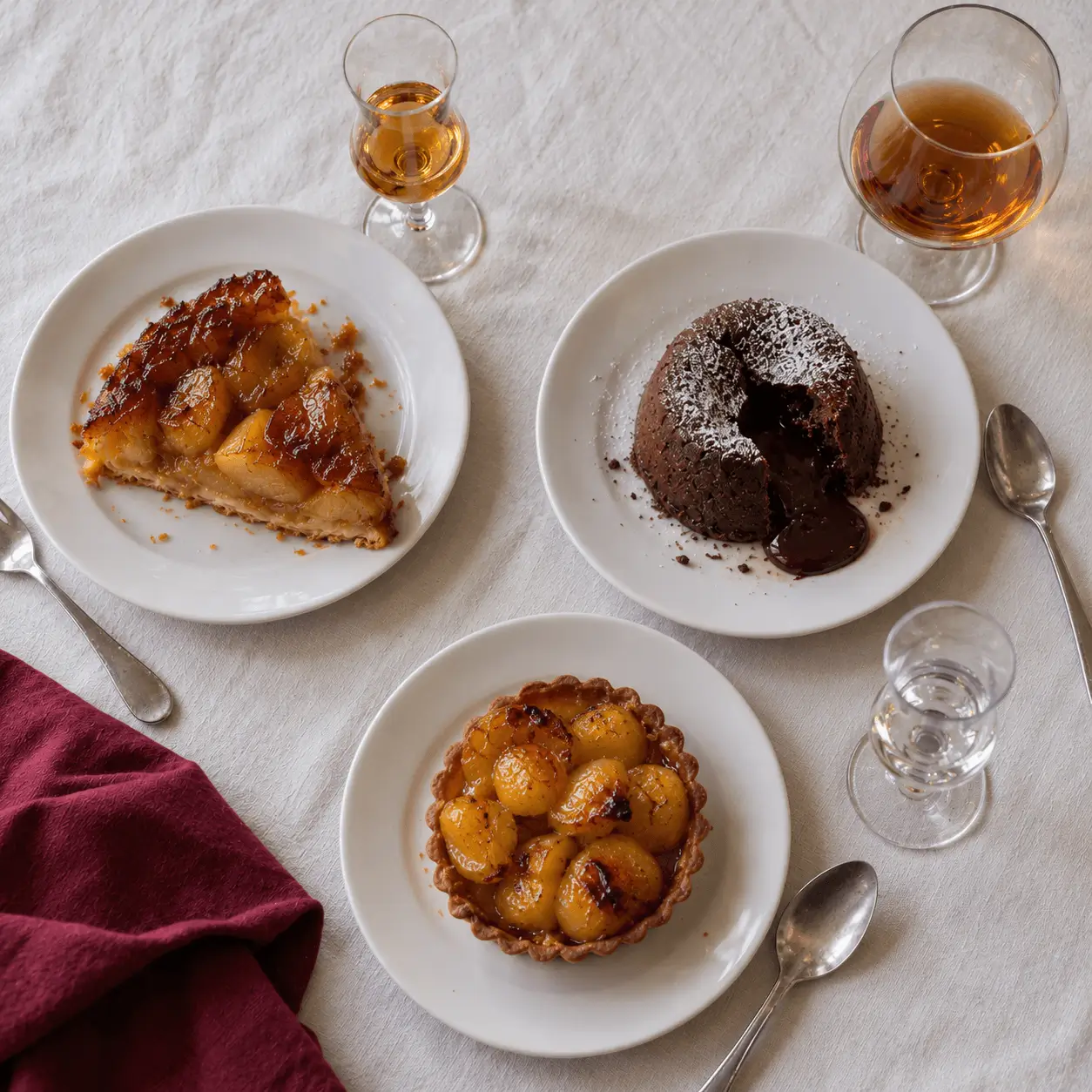
| Dessert or end of meal | Digestif to consider |
|---|---|
| Tarte Tatin, crêpes, apple desserts | Calvados |
| Prunes, far breton, walnut desserts | Armagnac |
| Chocolate, coffee, crème brûlée | Cognac VSOP or XO |
| Chocolate and orange, crêpes Suzette | Grand Marnier, Cointreau |
| Mirabelle tart, clafoutis, pear sorbet | An eau-de-vie of the same fruit |
| Lemon or almond desserts | Limoncello, amaretto |
| End of meal without dessert | Chartreuse, Bénédictine, for their herbal aromas |
In the tradition described in Chapter 9, it follows coffee or accompanies it, in a suitable glass. Sip slowly and feel free to decline without explanation. Preferences do not depend on gender. An infusion or water is just as welcome.
And coffee, if the others do not want any?
Yes, without keeping the table waiting. Offer it to everyone or coordinate its arrival with the others’ dessert or digestif. In France, it usually follows your dessert; this is not a universal prohibition. A café gourmand can replace dessert. Chapter 9 explains these gestures.
Three pairings to reconsider
- Very tannic red with cheese: try a white, vin jaune, or a sweet wine with blue cheeses.
- Brut champagne with a very sweet dessert: a sweeter cuvée, Muscat or Banyuls may work better.
- Powerful red with chilli or sweet-and-savoury food: try a low-alcohol aromatic white or a supple red.
Frequently asked questions
What wine goes with fish?
A dry, fresh white for grilled fish: Chablis, Sancerre or Muscadet. A full-bodied white can accompany a rich sauce; a light red, a red wine sauce.
What wine goes with steak and red meat?
A structured red can accompany grilled meat: Médoc, Cahors or Côte-Rôtie. For meat in sauce, follow the preparation, such as Burgundy with bœuf bourguignon.
What wine goes with cheese?
Try Sancerre with goat’s cheese, chardonnay or vin jaune with Comté, champagne with Brie. A sweet wine or Banyuls can balance blue cheeses; a supple red remains possible.
Can you drink champagne throughout the meal?
Yes, if you wish: blanc de blancs with fish, vintage or blanc de noirs with poultry. For red fruit, choose a rosé with suitable sweetness; demi-sec can suit a sweet dessert.
Which digestif after a rich meal?
If you would like one, a small serving of Chartreuse, Bénédictine or aged rum can conclude the meal. It does not aid digestion. Declining or choosing an infusion is equally natural.
Go further with Maison Manners
These pointers reflect Chapters 8 « La symbiose des plats, de l’apéritif au plat » and 9 « Dessert, digestif et café ». Chapter 7 « Commander avec aisance » explains the wine-tasting ritual. The Course is taught in French; each Chapter includes a Lesson, a « Key points » summary and a Quiz.
Related guide: how to hold a fork and knife the French way
Ten free questions. An email address is requested before you see the Score.
Discover the Course, taught in French
Maison Manners is built and run by AI agents on NanoCorp.